Solo exhibition · 9 February 2022
Real — Unreal
Światowid European Meetings Center
Elbląg, Poland
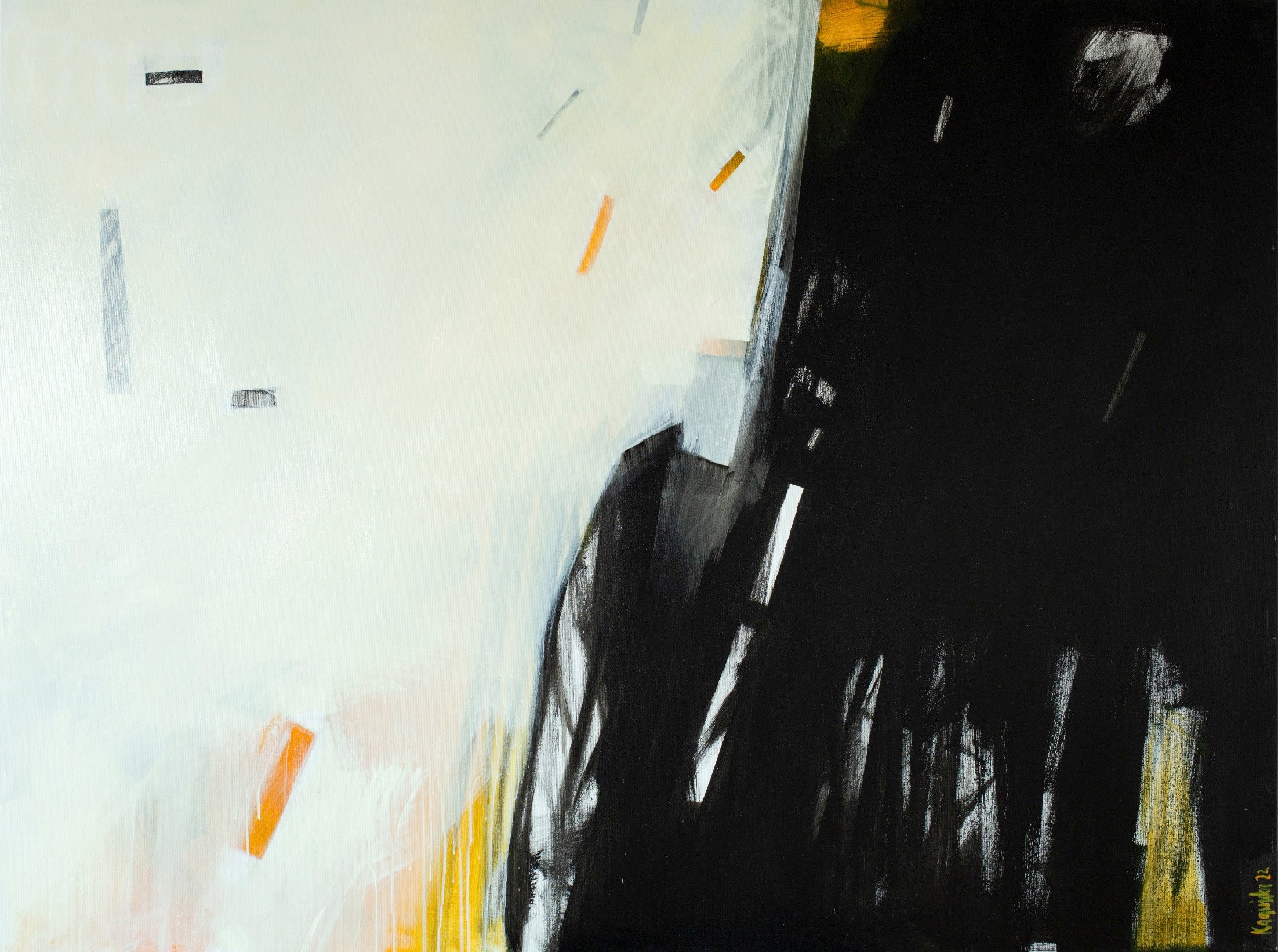
Contrast or harmony? Opposition or mutual penetration? The duality of the real and abstract world is the main theme of this narrative. Where does one end and the other begin? Is the boundary between them rigid or flexible — perhaps transparent, fluid or symbolic?
The image painted by the artist is always real. It is an object with physical properties. Its subject, however, appeals to the viewer’s imagination even when it depicts an object with photographic accuracy.
Ada Kamińska’s exhibition Real — Unreal is divided into two thematic poles. The first relates to the natural world, while the second decidedly departs from it. In both cases, form speaks more strongly than narrative.
Scale difference
The landscapes are canvases of the same format. They seem small — not objectively, but in comparison with the large abstract canvases. This contrast establishes a hierarchy: the observed world becomes less significant than the world created.
Difference in proportions and composition
The landscapes use uniform proportions and horizontal compositions. The abstractions rise and stretch across unusual formats, with dynamic, open compositions that propose a different perspective and a new frame.
Difference in tonality
The landscapes remain neutral, cool and subdued. This deliberate restraint is set against the stronger colour and dominant accents of the abstract canvases.
Difference in pace
The landscapes proceed slowly and quietly. In the abstractions, the pace is faster: colour is laid down freely, with wider gestures and more decisive movement.
Difference in expression and space
The landscapes play a deliberately subordinate role. Their quiet voice allows the abstractions to speak more strongly. While the reduced painterly means make the landscapes feel flatter, the abstractions build depth through contrast, colour, rubbing and layered surfaces.
The exhibition title therefore takes on an ironic meaning. The transformation of reality can feel more real than its representation: intensity, rhythm, depth and the joy of making oppose the ordinary and the banal.